ADBP710043 Blue Print ABS Sensor
MPN:
ADBP710043
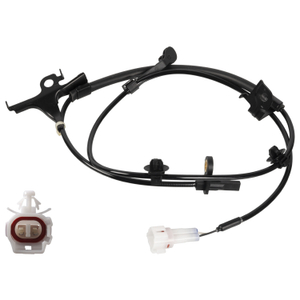
| Brand | Blue Print |
| Weight | 0.15 kg |
| Dimensions | 44 x 145 x 140 mm |
About
An ABS Sensor, as part of the anti-lock braking system, detects wheel speed to prevent skidding during hard braking. Typically used in vehicles equipped with ABS, it can be found on a range of models from various manufacturers. The technical advantages include improved safety through better traction control and reduced stopping distances.
ABS sensors are electromagnetic devices that monitor wheel rotational speed and report this data to the vehicle’s ABS control module. Typically mounted near each wheel hub and brake rotor, they utilize a toothed reluctor ring or magnetic encoder to generate an AC voltage signal proportional to wheel speed. Sensor output is critical for ABS, traction control, and electronic stability control system functionality, enabling precise determination of wheel slip and imminent lockup. These sensors are commonly inductive, Hall-effect, or magnetoresistive, each offering varying sensitivity and temperature range characteristics. Signal integrity is maintained through shielded wiring and robust mounting to minimize interference and ensure accurate readings.
Dispatch time:
1-2 days
In stock
€
20.68
Excluding shipping costs
Shipping rates
Shipping to:
United States
10 years in the auto parts market
1 year warranty for all products
Worldwide delivery
Free return or exchange within 14 days
Have a question?
Send us a message on WhatsApp