
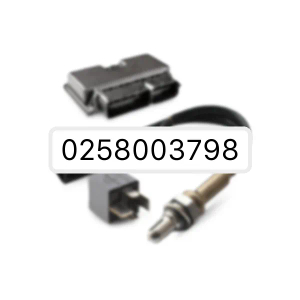
0258003798 Bosch Oxygen Sensor
MPN:
0258003798
| Brand | Bosch |
| Weight | 0.13 kg |
| Dimensions | 44 x 134 x 99 mm |
About
Oxygen Sensor: This part monitors the oxygen levels in an engine's exhaust system, enabling optimal combustion and minimizing emissions. It is commonly used in vehicles to maintain a precise air-fuel mixture. The Oxygen Sensor offers several technical advantages, including improved fuel economy, reduced environmental impact, and increased engine reliability.
Sensors and valves are critical components within vehicle engine management, chassis, and body control systems. Sensors monitor physical parameters like temperature, pressure, position, and speed, converting them into electrical signals for the Engine Control Unit (ECU) or other control modules. Valves regulate the flow of fluids – fuel, air, coolant, oil, exhaust gases – based on electronic signals. Modern sensors utilize technologies such as piezoelectric, Hall effect, and capacitive sensing for accuracy and durability. Valves often employ solenoid actuators for precise and rapid control, and may incorporate pulse-width modulation (PWM) for variable flow rates. Failures within this category typically manifest as drivability issues, emissions faults, or system malfunctions detectable via diagnostic trouble codes (DTCs).
Dispatch time:
1 days
In stock
€
45.88
Excluding shipping costs
Shipping rates
Shipping to:
United States
10 years in the auto parts market
1 year warranty for all products
Worldwide delivery
Free return or exchange within 14 days
AllStockParts is a Fixparts company store that sells only items currently in stock at our warehouse in Latvia
Operated on DynamechContacts
Rēzeknes street 5B, Riga, LV-1073, Latvia
Reg.nr. 40103495107
VAT.Nr. LV40103495107
Have a question?
Send us a message on WhatsApp