ADK84331 Blue Print Brake Disc
MPN:
ADK84331
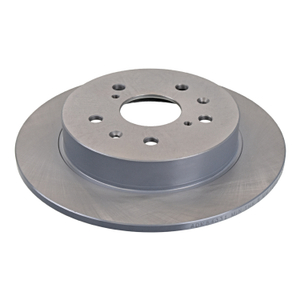
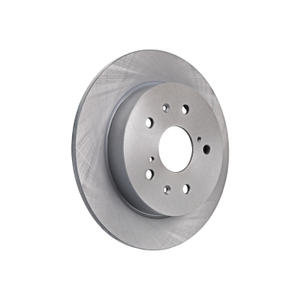
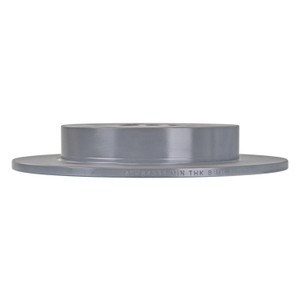
| Brand | Blue Print |
| Weight | 4.47 kg |
| Dimensions | 298 x 48 x 298 mm |
About
A Brake Disc is an essential item in the vehicle's braking system, serving to absorb and dissipate excessive heat generated during braking operations. Its application spans across various vehicles, especially those with high-performance or heavy-duty needs. This product offers several technical advantages: it ensures optimal braking performance, prolongs the lifespan of brake components, and provides enhanced safety through efficient heat dissipation.
Brake discs, or rotors, are metallic circular components integral to a vehicle’s braking system, mounted on the wheel hubs. They function as a friction surface for brake pads, converting kinetic energy into thermal energy via clamping force to decelerate or stop wheel rotation. Discs are typically constructed from gray cast iron, though carbon ceramic and composite materials are also utilized for performance applications. Key characteristics include diameter, thickness, venting style (solid, vented, drilled/slotted), and rotor hat offset. Variation exists between solid, vented, and cross-drilled/slotted designs, impacting heat dissipation and performance characteristics.
Dispatch time:
1-2 days
In stock
€
22.61
min. 2 units(€ 45.22)
Excluding shipping costs
Analogues
Budget analogue
Febi
FEBI108609
1-2 days
from€22.61
Shipping rates
Shipping to:
United States
10 years in the auto parts market
1 year warranty for all products
Worldwide delivery
Free return or exchange within 14 days
Have a question?
Send us a message on WhatsApp